
Megalithic Cairns on Loughcrew Carnbane West
Carnbane West forms the western half of the Loughcrew passage tomb cemetery and contains some of the largest and most intriguing monuments in the entire complex. Together with Carnbane East, it forms part of Sliabh na Calliagh, one of the most important concentrations of Neolithic passage tombs in Ireland.
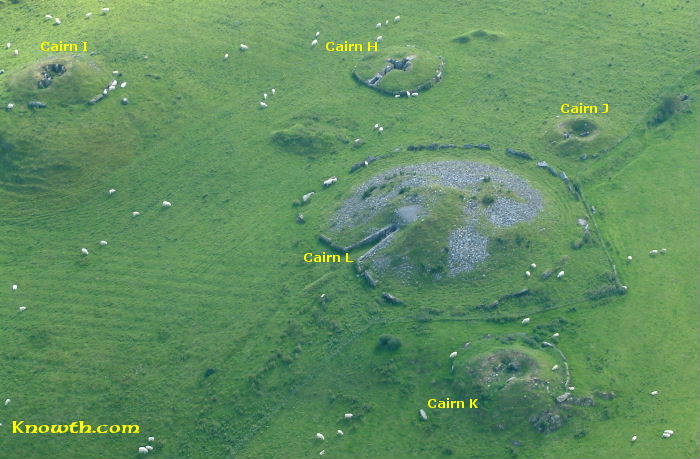 Aerial view of Loughcrew Cairn L.
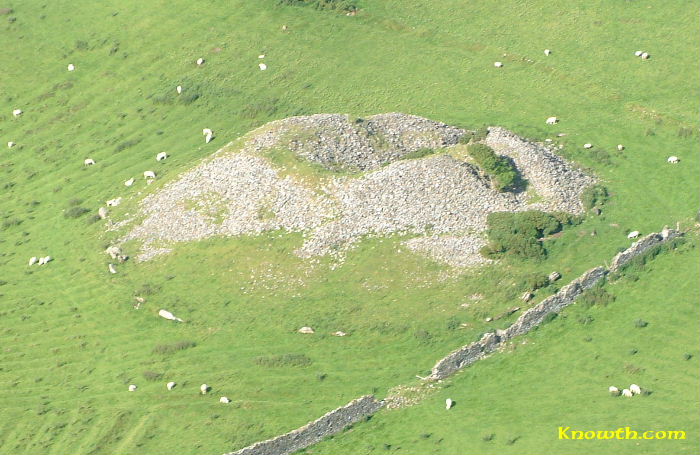 Aerial view of Loughcrew Cairn D.
Today fifteen monuments survive on Carnbane West, ranging from substantial passage tombs to smaller ruined cairns. The hill occupies a commanding position overlooking the surrounding countryside and would have been a prominent landmark in the Neolithic landscape. Archaeologists believe that the monuments on both hills formed part of a single ceremonial complex, linking the tombs across the ridges of Loughcrew into a unified sacred landscape.
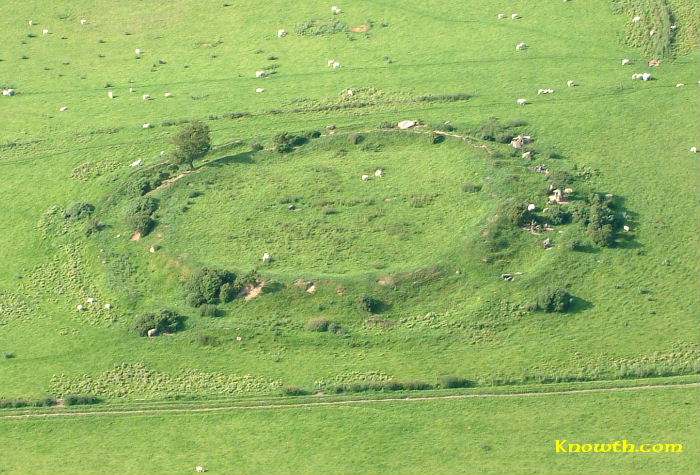 Loughcrew Ringfort - aerial view.
The best-known monument on Carnbane West is Cairn L, one of the finest surviving passage tombs in the Loughcrew complex. Measuring approximately 41 metres in diameter, the cairn contains a well-preserved chamber with seven recesses arranged around the interior. Unlike many Irish passage tombs, Cairn L contains a standing stone within the chamber itself and a large stone basin positioned in the end recess. The tomb is also richly decorated with megalithic art, including spirals, circles, chevrons and geometric designs carved into the stone surfaces. These carvings are among the most impressive examples of Neolithic art found anywhere in Ireland.
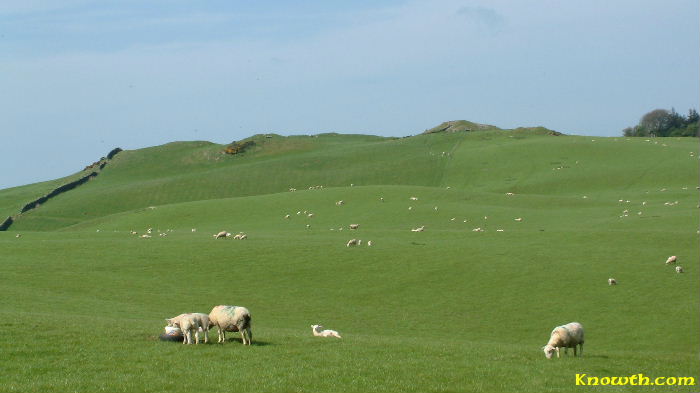 Sheep on Loughcrew Carnbane West.
One of the most remarkable features of Cairn L is its solar alignment. At certain times of the year, sunlight enters the passage and illuminates the chamber, basin and decorated stones deep within the tomb. This demonstrates the sophisticated understanding of the landscape and sky possessed by the builders, who carefully aligned their monuments with significant solar events.
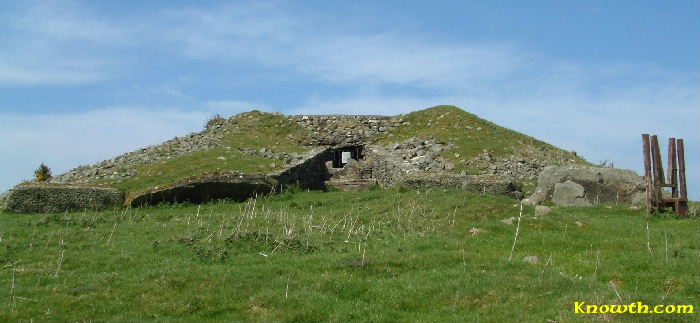 Cairn L front view - Carnbane West Loughcrew.
The Stone Age Cairn L on Carnbane West at Loughcrew was featured in the March 2015 edition of Astronomy Ireland in an article by Ann Dunne, Irish Recorded Oldest Known Eclipse 5355 Years Ago.
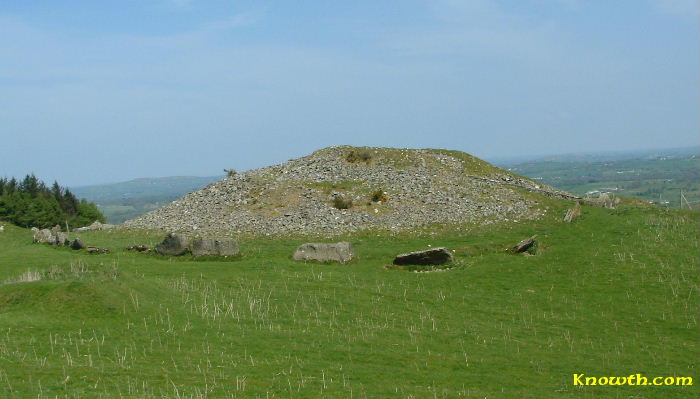 Cairn L side view - Carnbane West Loughcrew.
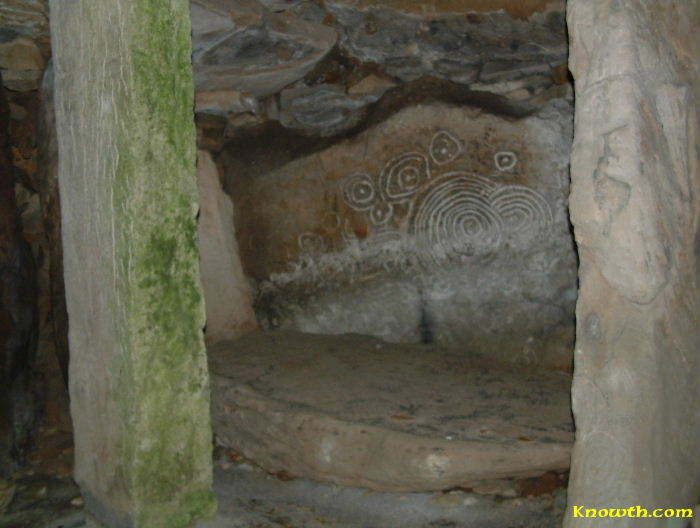 Loughcrew Cairn L - Limestone monolith.
The modern rediscovery of Carnbane West owes much to Eugene Alfred Conwell, who began investigating the Loughcrew hills in the 1860s. Conwell carried out extensive surveys and excavations and established the lettering system still used to identify the cairns today. He also commissioned detailed drawings of the megalithic art, preserving an invaluable record of carvings that have since weathered and deteriorated.
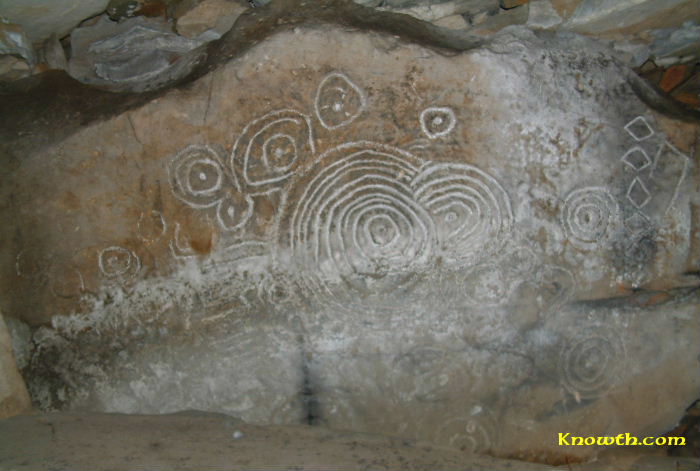 Loughcrew Cairn L - Megalithic Art.
Cairn D is the largest surviving monument on Carnbane West and one of the largest passage tomb cairns in Ireland. Measuring approximately 55 metres in diameter, it dominates the western hill. Despite extensive investigations during the nineteenth century, no chamber was discovered, and the monument remains largely unopened. As a result, Cairn D continues to be one of the great archaeological mysteries of Loughcrew. It may still contain an undiscovered chamber or other important archaeological features hidden beneath its massive mound of stone.
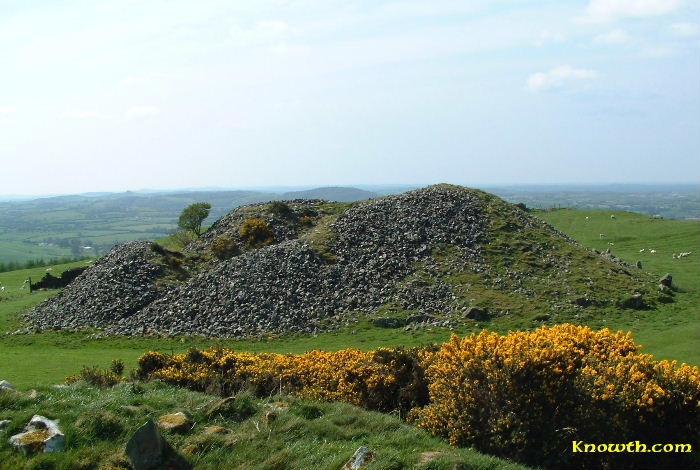 Loughcrew Cairn D - Circumference 163m.
Another important monument is Cairn H, which became famous for the discovery of hundreds of decorated bone fragments dating to the Iron Age. These finds indicate that long after the passage tombs had ceased to be used for burial, they continued to hold significance for later communities. The beautifully incised bone objects, decorated in the La Tène artistic style, suggest that Carnbane West remained a place of ritual activity thousands of years after the original monuments were constructed.
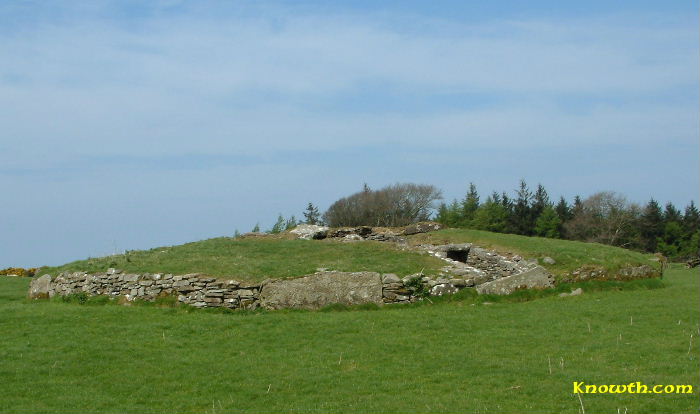 Loughcrew Cairn H - Circumference 40m.
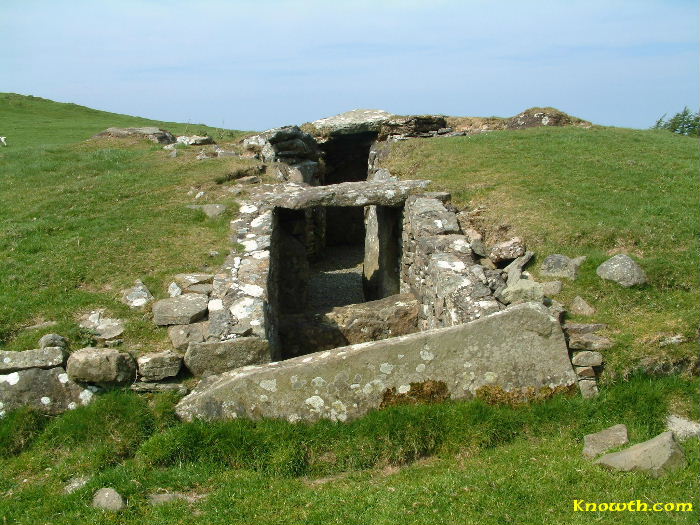 Loughcrew Cairn H.
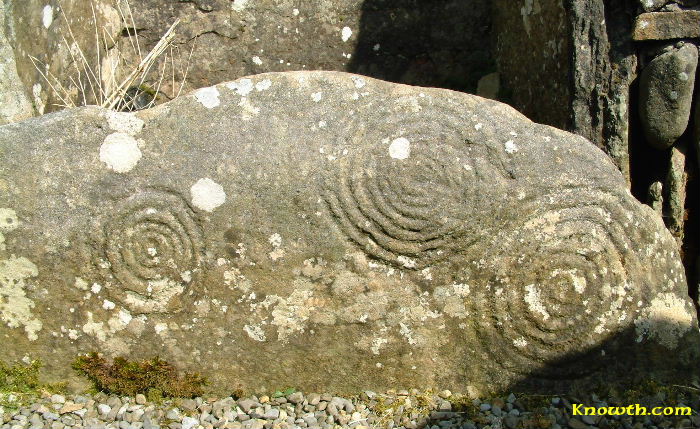 Concentric circles - Cairn H Loughcrew.
Although public access to Carnbane West is currently restricted because the monuments lie on private land, the hill remains one of the most important archaeological landscapes in Ireland. Its combination of monumental architecture, megalithic art, solar alignments and later ritual activity provides a remarkable window into prehistoric life. Together with the monuments on Carnbane East, Carnbane West forms part of a Neolithic cemetery that ranks among the most significant megalithic complexes in Europe.
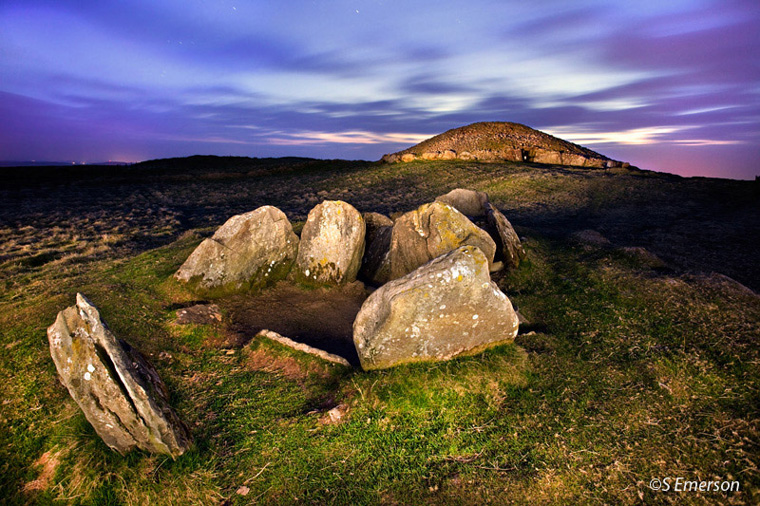 Loughcrew Cairn V with Cairn T in the background, photo by Steve Emerson.
Read An archaeoastronomical assessment of Tomb L on Carnbane West by Dr Frank Prendergast.