
Art by Judith Quain inspired by megalithic sites
Loughcrew is one of the great passage tomb cemeteries of ancient Ireland, set on high ground in County Meath with wide views across the surrounding countryside.
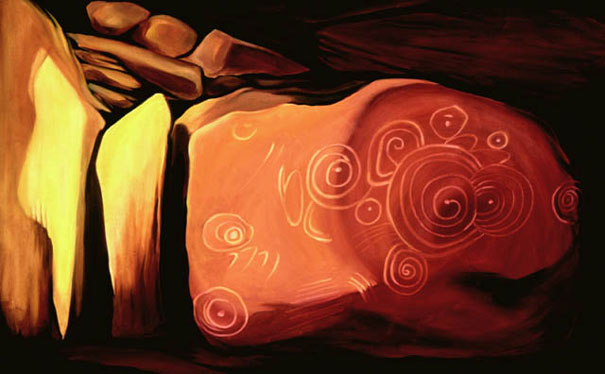 Samhain Sunrise at Loughcrew Cairn L, oil on canvas 30" x 40".
Cairn L forms part of the remarkable prehistoric landscape at Loughcrew, where seasonal light connects the monument with the rhythms of the year.
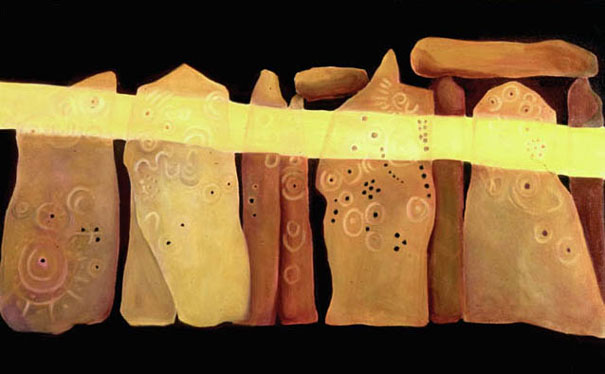 Spring Equinox at Loughcrew Cairn T, oil on canvas 24" x 36".
Loughcrew Cairn T is best known for the illumination of its chamber around the spring and autumn equinoxes.
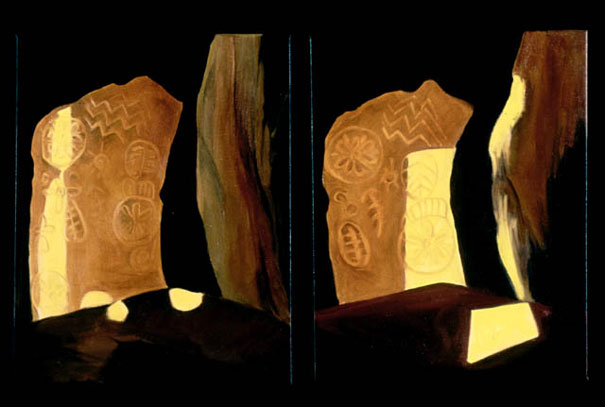 One Hour, 18 Minutes Loughcrew Equinox, diptych, two 11" x 14" panels.
At sunrise, light enters the Cairn T passage and reaches the decorated backstone, creating one of the most evocative examples of prehistoric astronomy in the Boyne Valley region.
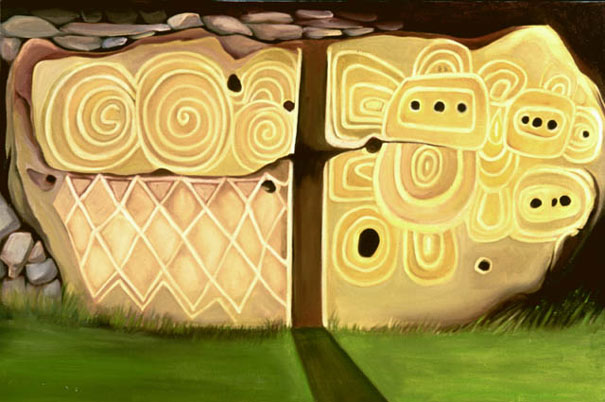 Newgrange Kerbstone K52, oil on canvas 24" x 36".
Newgrange is the best known monument within the Brú na Bóinne World Heritage Site. Built more than 5,000 years ago, it is famous for the winter solstice sunrise alignment and for the kerbstones that surround the mound, including the striking megalithic art of Kerbstone K52.
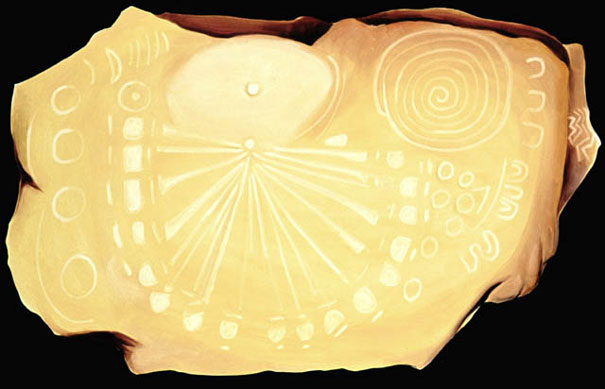 Timepiece, Knowth Kerbstone K15, oil on canvas 24" x 36".
Knowth contains the greatest concentration of megalithic art in western Europe, with carved kerbstones surrounding the great mound. Kerbstone K15 is part of this extraordinary artistic tradition, where spirals, circles and other motifs reflect the skill and imagination of the passage tomb builders.
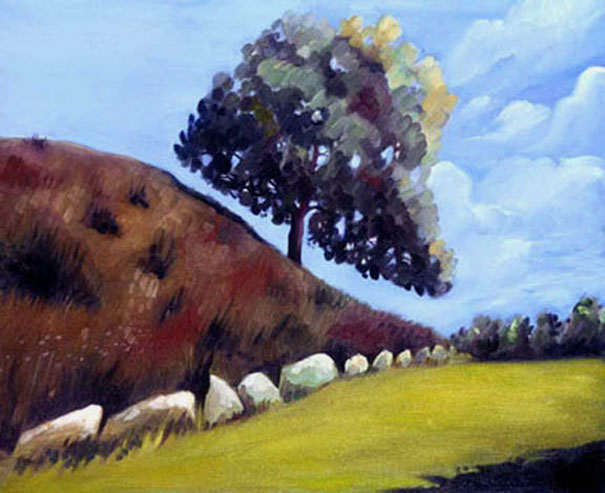 Mound of Dowth, oil on canvas 24" x 24".
Dowth is one of the three great passage tomb mounds of Brú na Bóinne, together with Newgrange and Knowth. Less restored and quieter in character, the mound retains a strong sense of antiquity, with its passages, kerbstones and winter sunset associations adding to the mystery of the site.
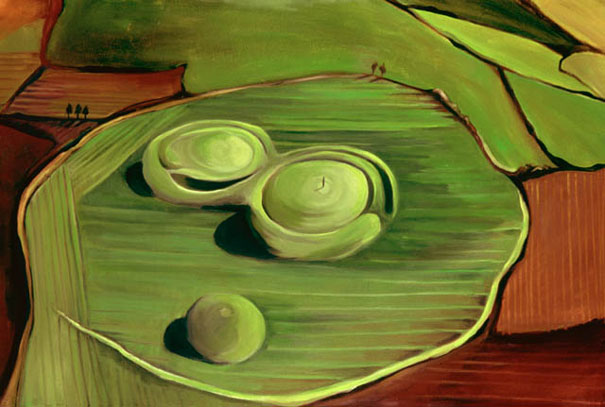 Mounds of Tara, oil on canvas 24" x 36".
The Hill of Tara is one of Ireland's most important ceremonial landscapes, long associated with kingship, assembly and myth. Its earthworks, mounds and ancient monuments form a layered historic setting that links prehistoric burial, ritual activity and the later traditions of the High Kings of Ireland.