
Newgrange World Heritage Site Images
Newgrange is Ireland's best known passage tomb, built around 3200 BC in the Boyne Valley of County Meath. Part of the Brú na Bóinne World Heritage Site with Knowth and Dowth, it is famous for the white quartz facade, carved kerbstones and the midwinter sunrise that lights its chamber.
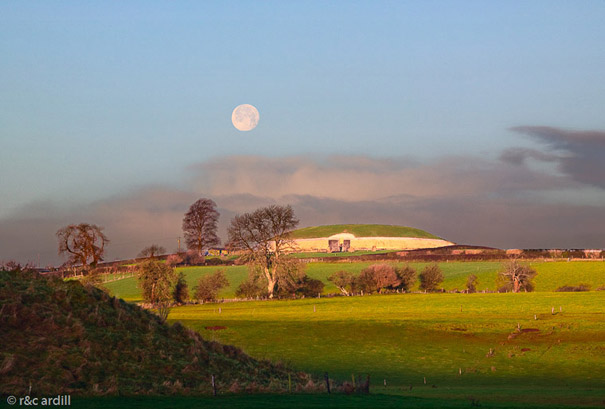 Stunning images of Newgrange by Robert and Cathy Ardill -
More ...
Stunning images of Newgrange by Robert and Cathy Ardill -
More ...
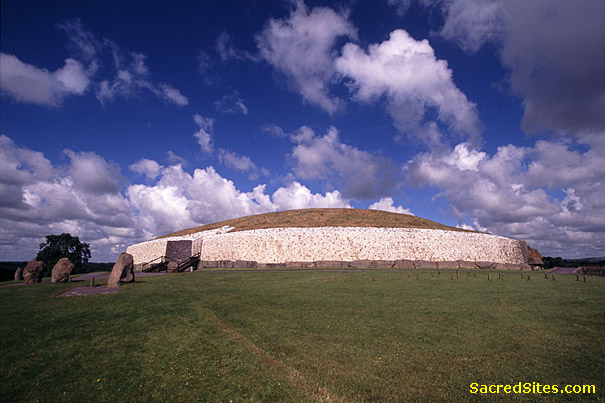 Newgrange World Heritage site from
SacredSites.com.
Newgrange World Heritage site from
SacredSites.com.
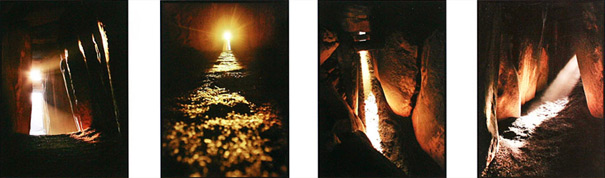 Newgrange Winter Solstice Photographs by Alan Betson.
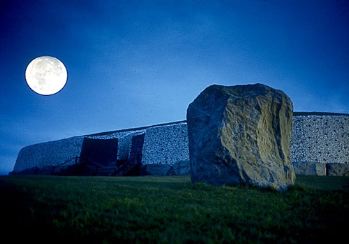 Full moon over Newgrange.
Moonlit Newgrange and standing stone, County Meath, Ireland.
By night the white quartz facade and the circle of standing stones take on a quieter presence than in the daytime crowds.
Moonlight softens the mound and throws long shadows across the kerb, recalling the monument's long association with the sky and the turning year.
Tim Hannan's photograph catches that nocturnal stillness, with Newgrange rising pale against the dark Boyne Valley landscape.
Full moon over Newgrange.
Moonlit Newgrange and standing stone, County Meath, Ireland.
By night the white quartz facade and the circle of standing stones take on a quieter presence than in the daytime crowds.
Moonlight softens the mound and throws long shadows across the kerb, recalling the monument's long association with the sky and the turning year.
Tim Hannan's photograph catches that nocturnal stillness, with Newgrange rising pale against the dark Boyne Valley landscape.
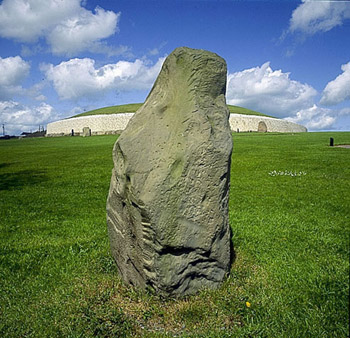 Decorated standing stone near Newgrange.
The standing stone was discovered lying in a drainage ditch at Dowth. Decorated on two faces with Neolithic megalithic art,
it is an important example of the distinctive stone carving tradition of the Brú na Bóinne landscape. The stone highlights that
decorated standing stones were once more widespread throughout the Boyne Valley and reflects the close archaeological relationship
between the great ceremonial complexes of Newgrange, Knowth and Dowth.
Decorated standing stone near Newgrange.
The standing stone was discovered lying in a drainage ditch at Dowth. Decorated on two faces with Neolithic megalithic art,
it is an important example of the distinctive stone carving tradition of the Brú na Bóinne landscape. The stone highlights that
decorated standing stones were once more widespread throughout the Boyne Valley and reflects the close archaeological relationship
between the great ceremonial complexes of Newgrange, Knowth and Dowth.
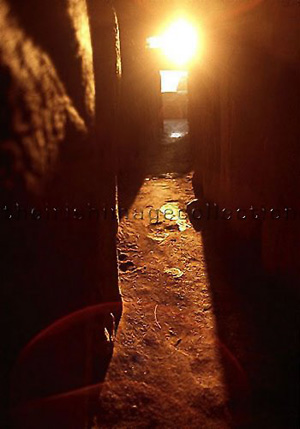 Winter solstice light in the Newgrange passage.
Newgrange at the winter solstice, County Meath, Ireland.
Around the shortest day of the year, sunrise sends a narrow beam of light through the roof-box above the entrance and deep into the passage.
For about seventeen minutes the chamber is lit from within, a rare midwinter event that has drawn people to the mound for millennia.
This photograph by Mike Bunn shows the monument in low winter light, with the pale quartz facade and the standing stones outside catching the cold brightness of December.
Winter solstice light in the Newgrange passage.
Newgrange at the winter solstice, County Meath, Ireland.
Around the shortest day of the year, sunrise sends a narrow beam of light through the roof-box above the entrance and deep into the passage.
For about seventeen minutes the chamber is lit from within, a rare midwinter event that has drawn people to the mound for millennia.
This photograph by Mike Bunn shows the monument in low winter light, with the pale quartz facade and the standing stones outside catching the cold brightness of December.
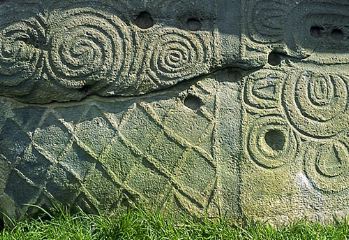 Newgrange Kerbstone 52.
Newgrange Kerbstone 52, County Meath, Ireland.
This great stone stands on the opposite side of the mound from the entrance stone, Kerbstone 1, and is among the most richly carved of Newgrange's 97 kerbstones.
Its spirals and other motifs rank with the finest Neolithic art in Europe. Liam Blake's photograph shows the deep picking of the designs and the weathered surface of the stone as it faces the Boyne Valley landscape.
Newgrange Kerbstone 52.
Newgrange Kerbstone 52, County Meath, Ireland.
This great stone stands on the opposite side of the mound from the entrance stone, Kerbstone 1, and is among the most richly carved of Newgrange's 97 kerbstones.
Its spirals and other motifs rank with the finest Neolithic art in Europe. Liam Blake's photograph shows the deep picking of the designs and the weathered surface of the stone as it faces the Boyne Valley landscape.
Newgrange Megalithic Passage Tomb
The Megalithic Passage Tomb at Newgrange was built about 3200 BC. The kidney shaped mound covers an area of over one acre and is surrounded by 97 kerbstones, some of which are richly decorated with megalithic art. The 19 metre long inner passage leads to a cruciform chamber with a corbelled roof. It is estimated that the construction of the Passage Tomb at Newgrange would have taken a work force of 300 at least 20 years.
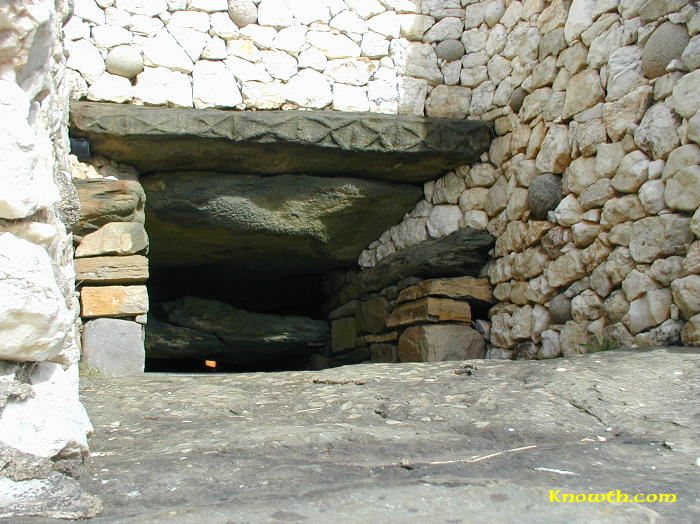 A shaft of sunlight shines through the roof box over the Newgrange entrance.
The passage and chamber of Newgrange are illuminated by the winter solstice sunrise. A shaft of sunlight shines through the roof box over the entrance and penetrates the passage to light up the chamber. The dramatic event lasts for 17 minutes at dawn from the 19th to the 23rd of December.
Admission to the chamber of the tomb at Newgrange for the Winter Solstice sunrise is by lottery, application forms are available at the reception desk in the Brú na Bóinne Visitor Centre.
Megalithic mounds such as Newgrange entered Irish mythology as sídhe or fairy mounds. Newgrange was said to be the home of Oenghus, the god of love. The Passage Tomb at Newgrange was re-discovered in 1699 by the removal of material for road building. A major excavation of Newgrange began in 1962; the original facade of sparkling white quartz was rebuilt using stone found at the site.
Newgrange has been designated a World Heritage Site by UNESCO and attracts 200,000 visitors per year. There is no direct access to the Passage Tomb at Newgrange, access is by guided tour from the Brú na Bóinne Visitor Centre located close to the village of Donore, Co. Meath. The last tour of Newgrange is 90 minutes before closing time of the Visitor Centre. Groups of 15 or more must book in advance.