
Hill of Tara - Ireland's Ancient East
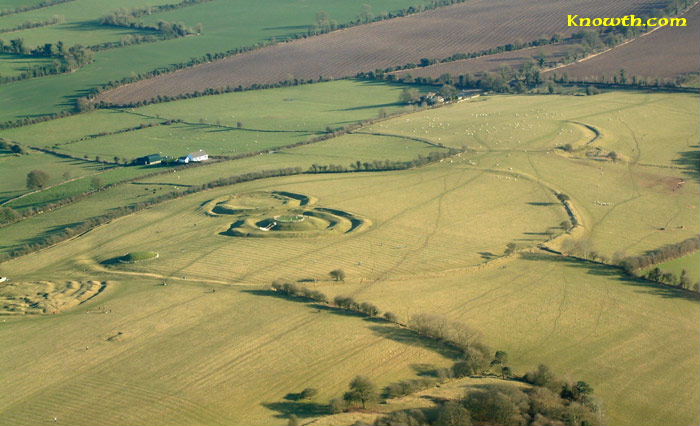
The Hill of Tara in the Boyne Valley is a ceremonial site associated with kingship rituals. From the time of the first Celtic influence until the Norman invasion in the 12th Century, the Hill of Tara was Ireland's political and spiritual capital. The King of Tara represented a very old ideal of sacred kingship in Ireland, imbued with mythical aura. Many Kings of Tara were also High Kings of Ireland.
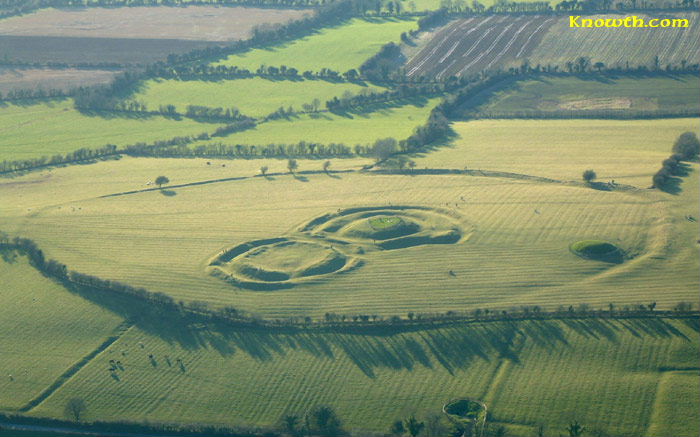 The Hill of Tara summit is enclosed by an Iron Age Royal Enclosure known as the Fort of the Kings.
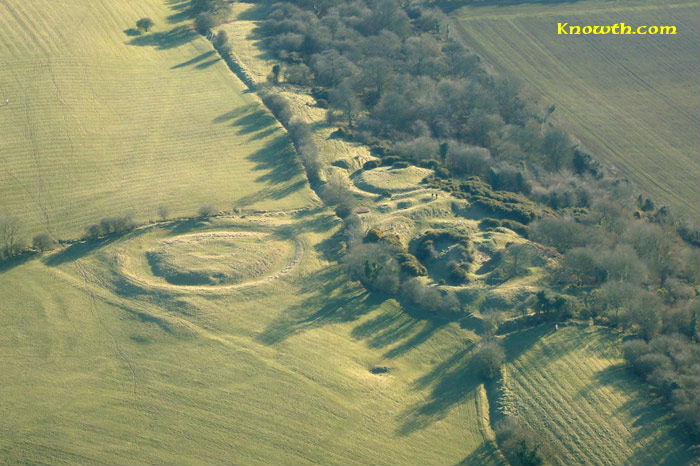 Rath Gráinne - Hill of Tara.
 The King's Seat and Cormac's House at the Hill of Tara.
The King's Seat
The King's Seat refers to the summit area of the Hill of Tara, centred on the great mound known as the Forradh. This was the symbolic heart of royal authority in early Ireland and is traditionally associated with the High Kings. At the top of the Forradh stands the Lia Fail, the Stone of Destiny, which according to tradition cried out when the rightful king of Ireland placed his foot upon it. While the stone's exact origin and original position are debated, its presence reinforces Tara's role as a place of inauguration, ceremony, and legitimacy rather than day to day rule.
Archaeologically, the Forradh is a large burial mound dating to the Neolithic period, later reused and reimagined in the early medieval period. The idea of the King's Seat reflects how later Irish tradition layered kingship mythology onto a much older ritual landscape.
Cormac's House
Cormac's House, or Teach Chormaic, is not a house in the modern sense. What is visible today is a circular earthwork, best understood archaeologically as a ringfort-like enclosure with ceremonial significance. The name is drawn from medieval tradition and is associated with Cormac mac Airt, one of the most prominent legendary High Kings of Ireland, remembered in later literature for wisdom, law, and just rule.
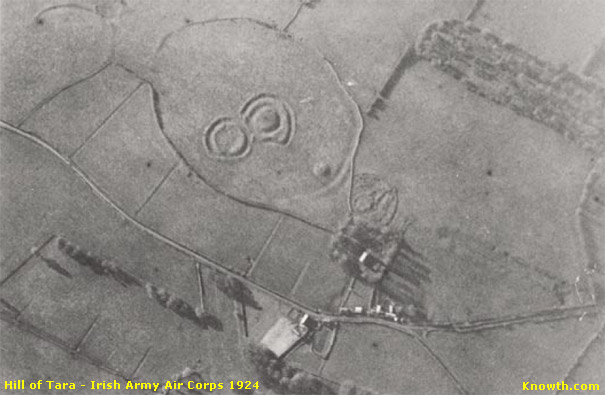 An Irish Army Air Corps aerial view of the Hill of Tara, photographed in 1924.